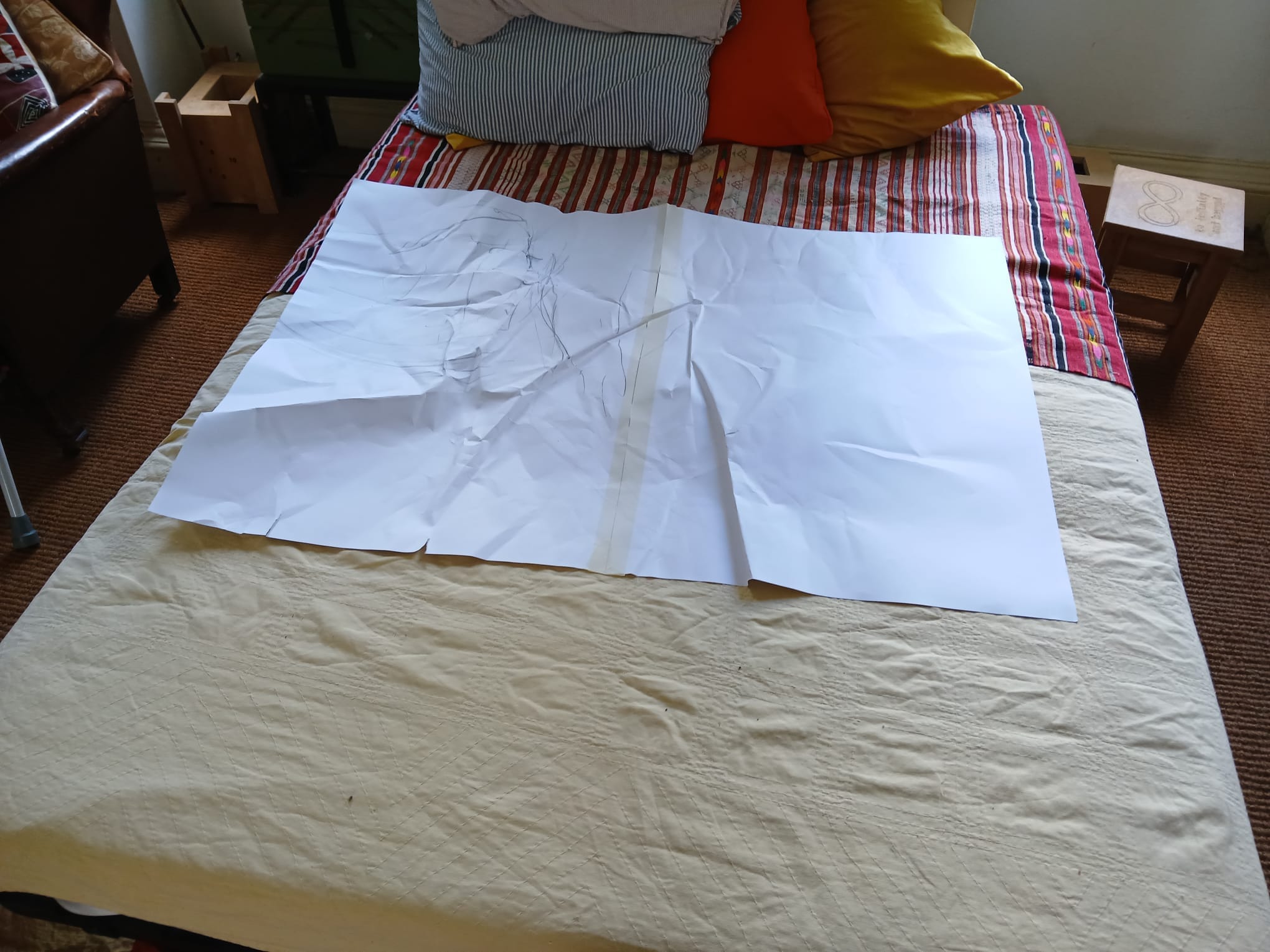
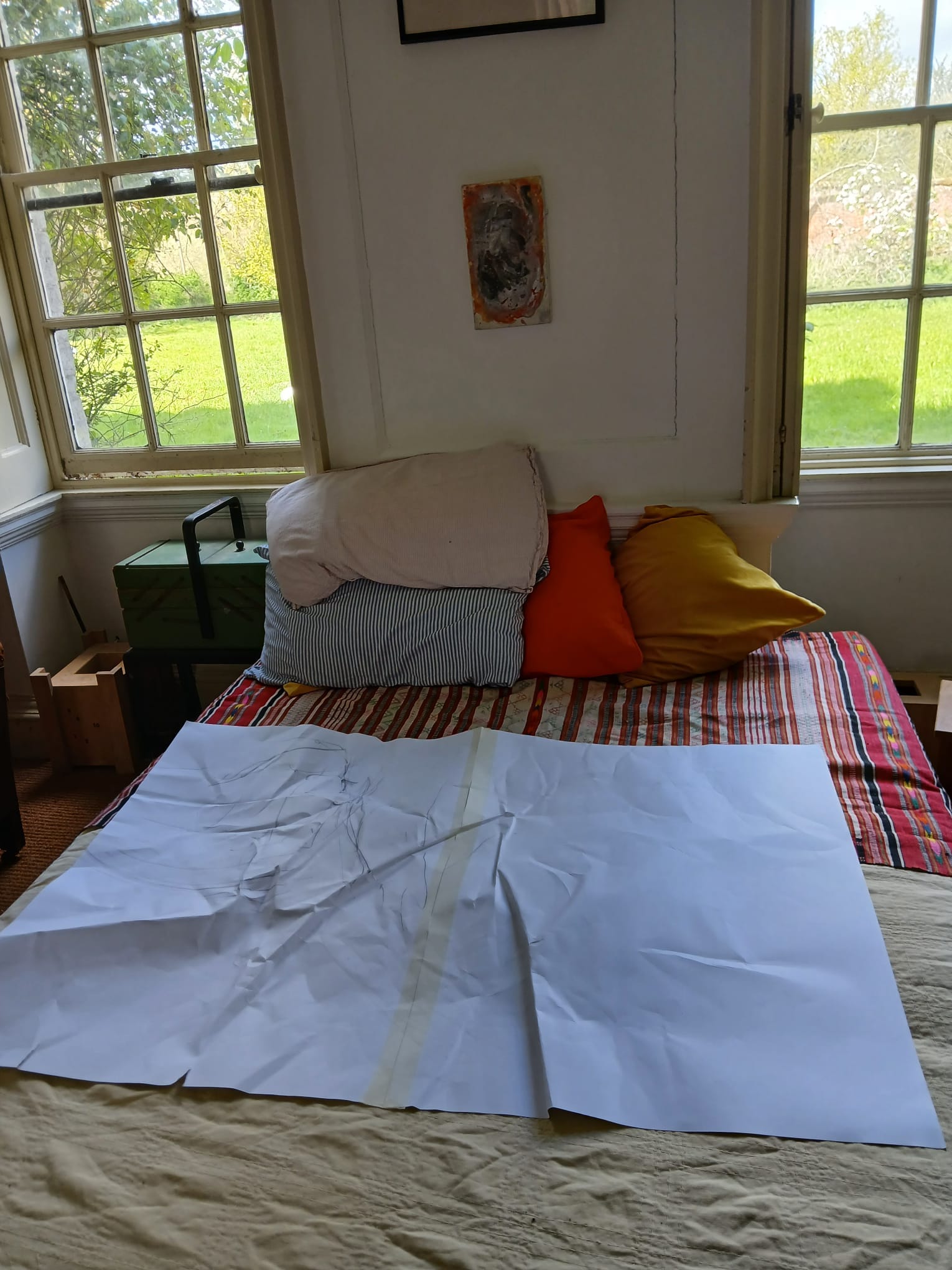
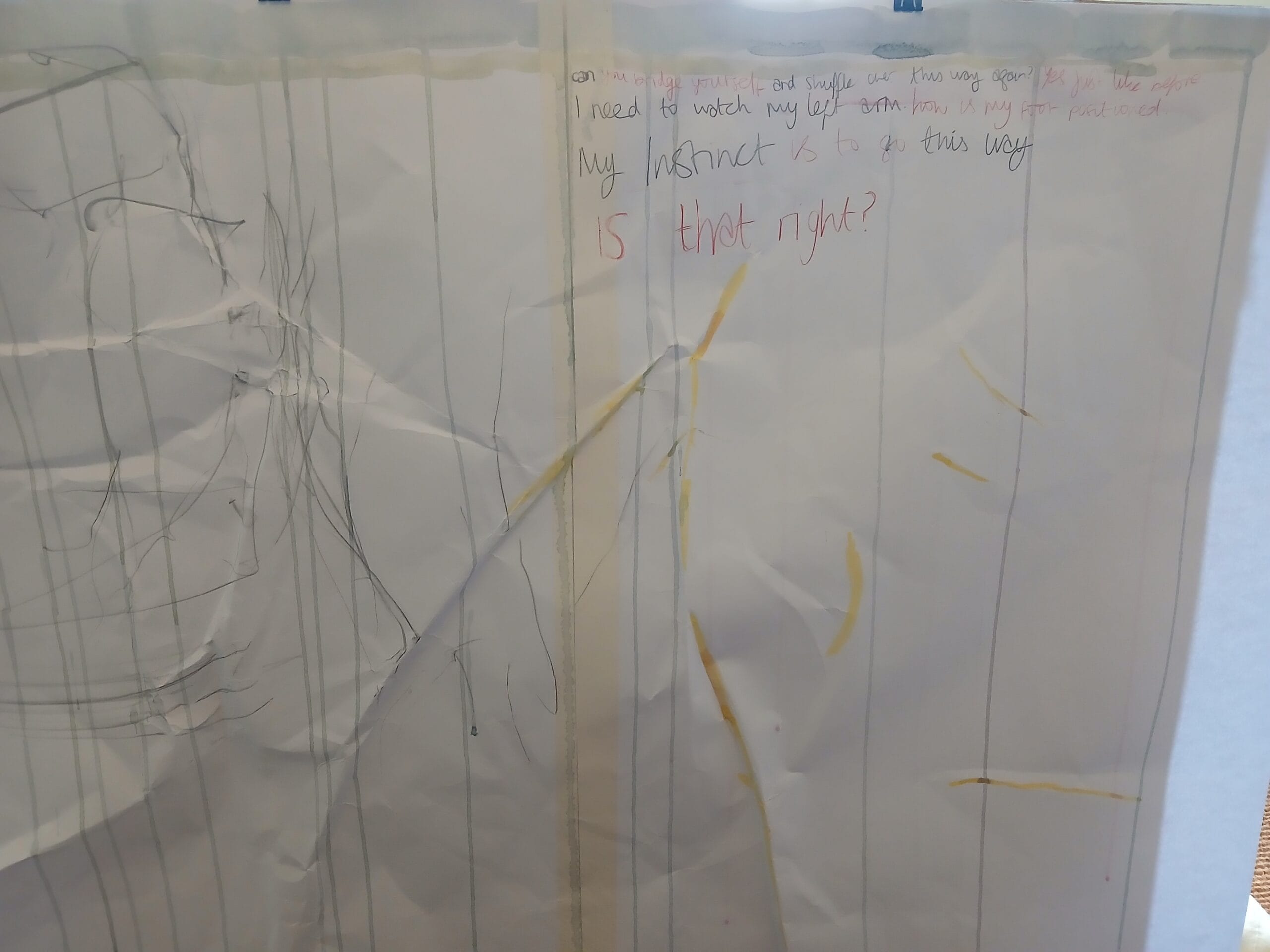
The drawing of Gestural Document began through slow, physiotherapy‑guided/learned movements across the large paper sheet: shifting weight, beginning with grounding through the feet, softening the knees, recalibrating balance by transferring onto the bed. Each adjustment of my body leaves a trace: a fold where the paper resisted, a pressure mark where the body leaned, a wax line that only reveals itself when the light catches it or through the gently laid watercolour wash. These subtle marks echo the quiet labour of care that enables the body to move at all.
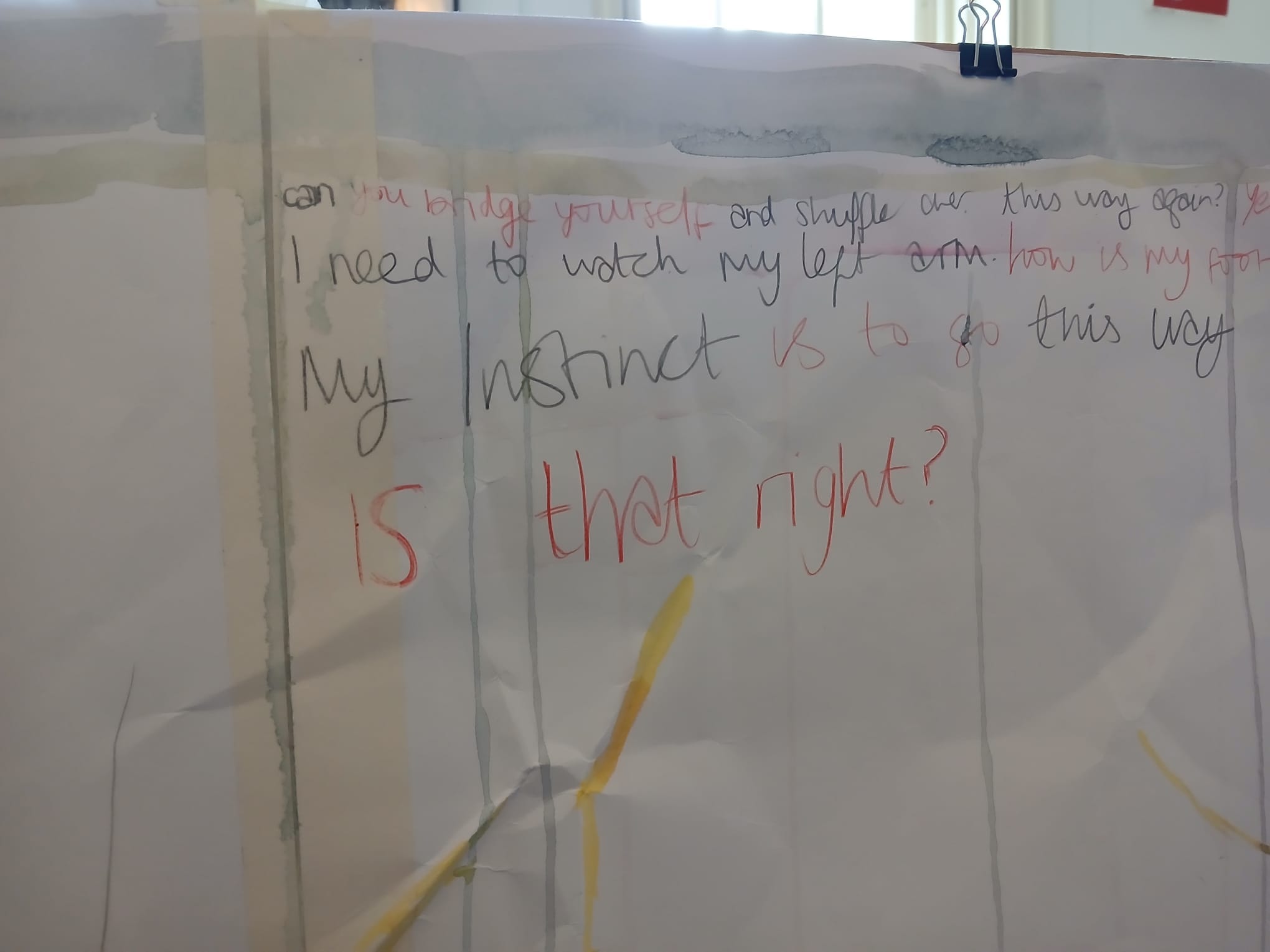
Across the surface, handwritten words appear and disappear within the watercolour wash. Some are reminders, some are instructions, some are the drifting fragments of internal dialogue that accompany the effort of moving a neurologically altered body. They function like whispered cues: “soften”, “breathe”, “watch your balance”; the kind of self‑talk shaped by long-term physiotherapy, fatigue management, and lived experience. Their presence acknowledges that movement is never just physical; it is cognitive, emotional, and relational.
The pale watercolour wash adds another layer of sensory information: a soft, atmospheric ground that lightly holds the text and gestures together. Its unevenness mirrors the fluctuating terrain of the disabled brain-body, with moments of clarity, moments of overwhelm or pain, moments where the world blurs and is being re-learned again imperfectly.
By situating the work on the bed, the piece finds home in the domestic, interdependent realities of disabled creativity. The bed becomes both studio and support structure, a place where care is enacted, rehabilitation practiced, and where art‑making becomes possible through pacing, adaptation, and the adaptive presence of others.
The work is a punctuation in my neurological rehabilitation, where I am documenting reclaiming my body and a bed space from the 7-month inpatient stay in 2022/23 because of Acquired Brain Injury.
Gestural Document is not a drawing of movement but a drawing from movement: a record of the negotiations, supports, and internal conversations that shape each gesture. It invites viewers to look closely, to attend to what is faint or nearly invisible, and to recognise care as a material shared choreography.