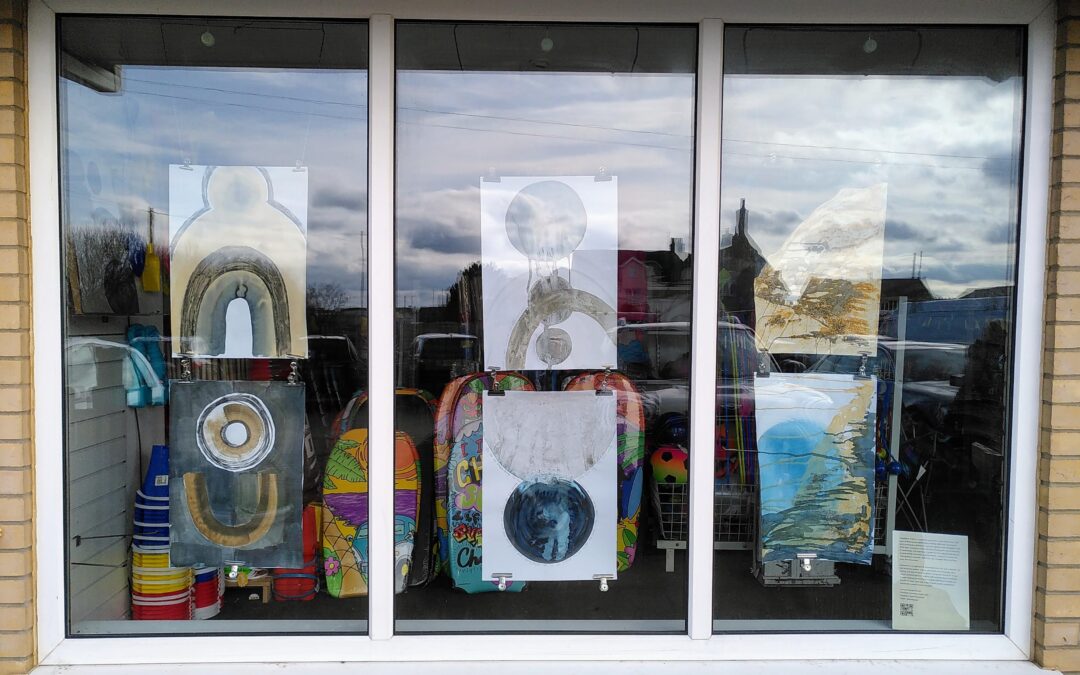
With thanks to support from curator Alison Holden-Standley, a selection of my recent artwork is on display at Beach Road, Sea Palling, North Norfolk. The venue is next to the Beach Rock Bistro, whilst the beach shop is closed during the off season. The window display of my work will be shown during the February half-term, from Saturday 18th February. The artworks include my ongoing Earth Light Paintings series. These have been created using local river, cliff and sea foraged materials, with photographic processes, to explore coastal climate change. In one of the windows is also the plant-dyed textile banner I worked on, partly, at The Yare Gallery in Great Yarmouth last year. This was created between Autumn Equinox 2021 to 2022, using locally foraged and grown plants and sunlight to dye
This year, I’ve been commissioned by Slow Ways to create walking stories. Slow Ways is creating a network of walking routes across the UK and asking people to walk, review and engage with the paths across the UK. For my first story Stiches in the water, I wanted to mark the 70th anniversary of the Great North Sea Flood in 1953 in January 2023. I’ve been exploring this theme through my work at Under Open Sky recently, and I felt drawn to see where the route took me
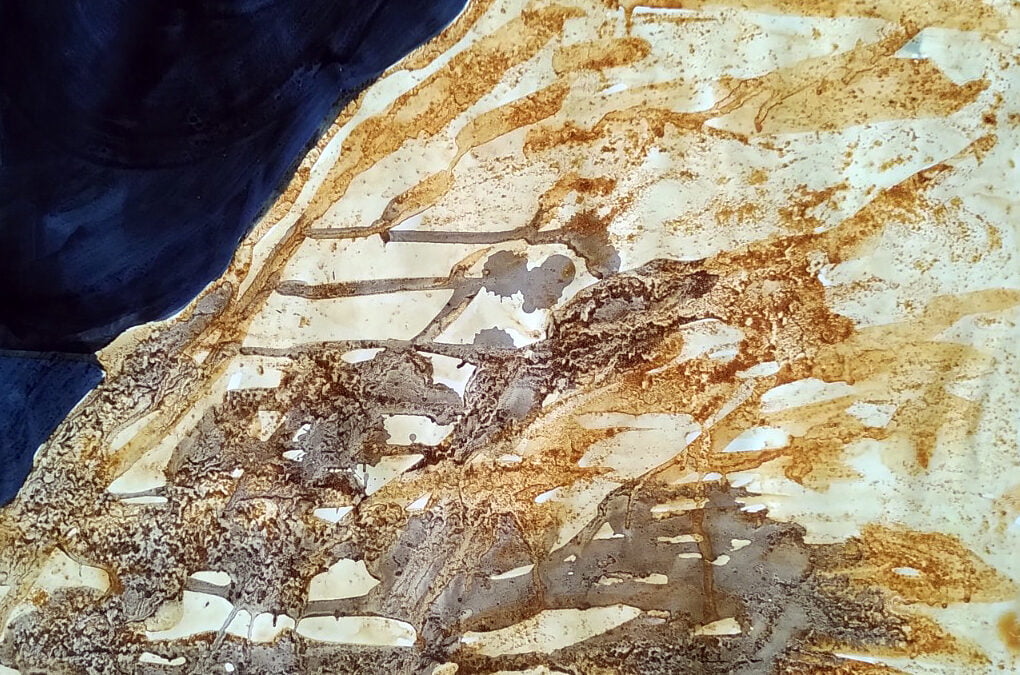
After taking the 7 mile route at the end of January, I spent sometime exploring what sights and sensations visually. I created a triptych of photographic painting, which will form part of my Earth Light Paintings series, created using collected cliff sand. I’m grateful to the Slow Ways for gifting me this time to walk, reflect and create
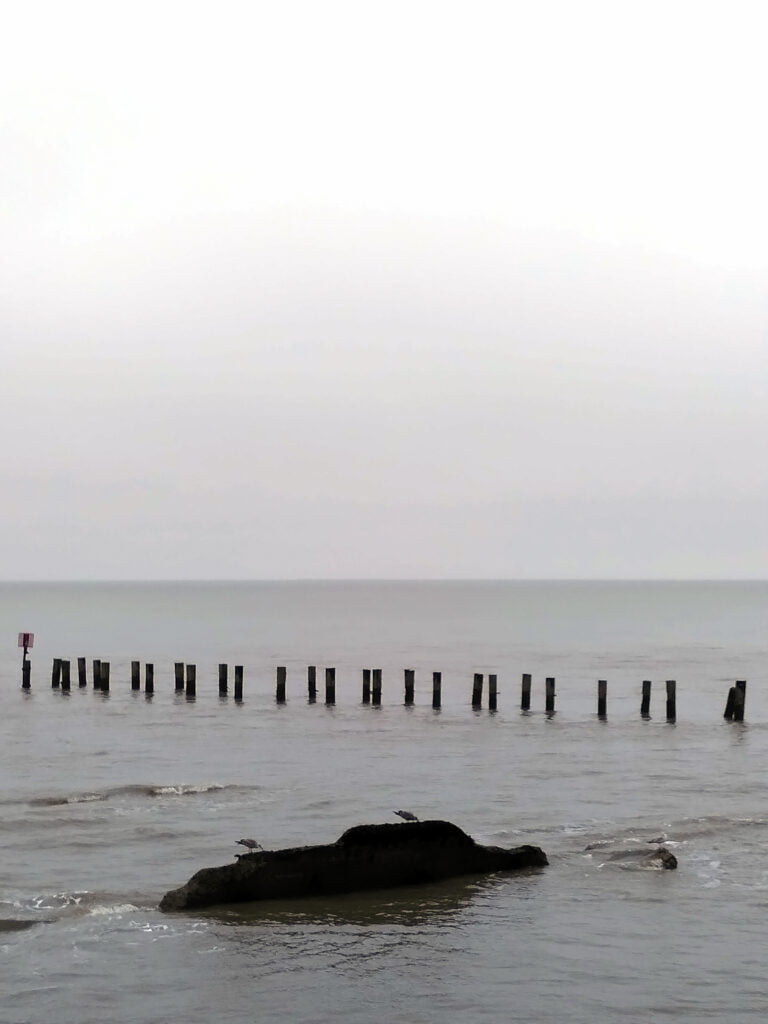
Hopton-on-Sea was living up to its name; the seawards edge felt sharp and stark. The coastal defences looked like stitches in the water. Much of this part of the route was unreachable, so I followed the redirected signs inland pointing to the ‘Alternative Coast Path’, through the caravans and fields. As I moved away from the sea, the sounds changed. The whooshing of the wind and sea was replaced by speeding cars and vans on the A47 across the ploughed land. I was unsure, again, what the next turn would be.
Unsure whether if or when I revisited this path again, would it exist? How far inland will the path travel on its Alternative Route? Or will we need to adapt further, beyond retreating and defending, like the Moken people of East Asia? These communities have learned to travel further into deeper waters for safety when the seas rise, like the dolphins do, as they have kept alive their water wisdom.
It’s been a dull rainy start to the New Year here, whilst Europe is experiencing extreme heat for the Winter season and parts of America are under a big freeze. It’s my first day back at my desk and it felt important to take a walk – in the rain and wind! – to see the sea
I live less than half a mile from the tidal River Yare, which enters from the North Sea just metres away, so enjoying ‘blue space’ is fairly accessible to me. I tend to see the sea most weeks usually, most often for work purposes (such as leading workshops or walks) and sometimes for my own pleasure. Today, my visit was timed with a short circular route via the Post Office to run some New Year errands, along the River Yare to the Gorleston breakwater, and back. I don’t do New Year’s Resolutions as such, but I do make a conscious effort to reflect back on the year as it ends, considering what worked and what didn’t, and what I’d like more or less of in the coming year. My 2022 reflections included thoughts about wanting more space and down-time, and wanting to continue to deepen into my ‘blue space’ engagement work, so taking a walk on this blustery January morning seemed to fulfil these desires!
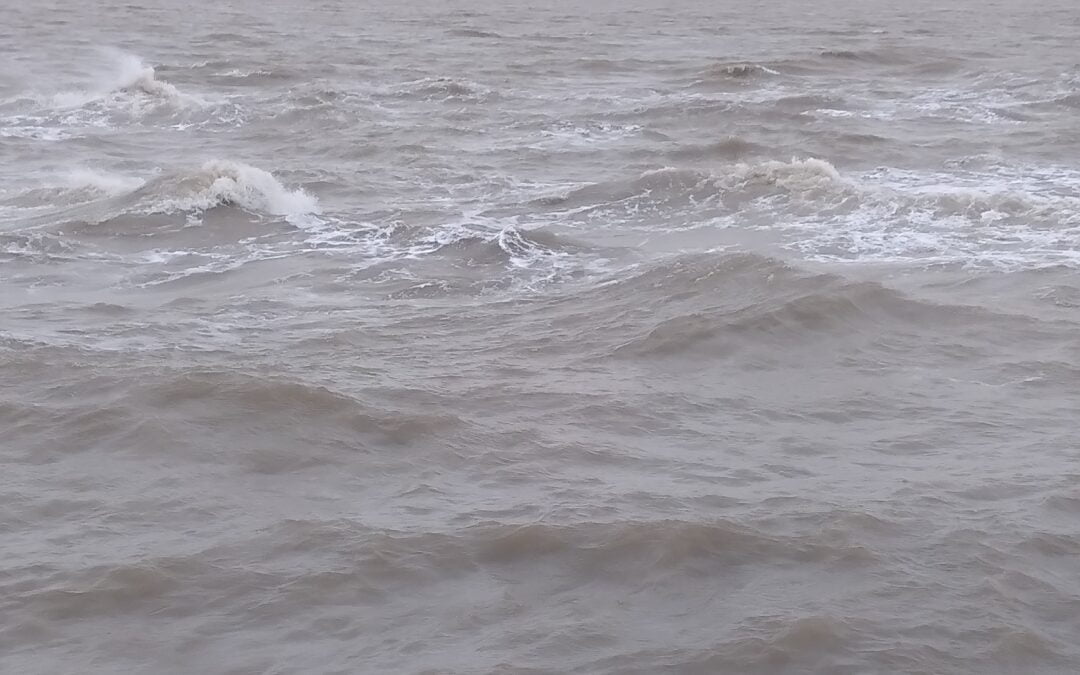
Swirling watery worlds – Earth Light Paintings (2022)The choppy sea at Gorleston-on-sea on 3rd January 2023Considering the lost land of Doggerland, now a deep sea water world – Earth Light Paintings (2022)
This year is National Year of the Coast, which marks the creation of the new England Coast Path. The aim of this initiative is to promote the coast as a sustainable year-round destination, to raise awareness of issues impacting coastal communities and businesses, and to showcase new developments and products. At Under Open Sky, we will – of course – be leading a range of coastal engagement activities with local Norfolk/Suffolk communities to deepen our connection to our sea and learn more about marine and coastal ecosystems. It’s been amazing to instigate and lead on the first year of our activity, and I’m excited to see how we grow and evolve in 2023
Through Under Open Sky, my project proposal ‘The Sea and Me’ has been shortlisted as a Centre for Cultural Value project this year. As part of the Collaborate fund, we’ll be matched up with an academic research partner to lead research around what it means to exist ‘on the (coastal) edge’ through arts-based methods
I’m particularly interested in how the seascape shapes our collective identities and the impacts on our health, especially in the context of the Norfolk coast being one of the fastest eroding in Europe and UK seaside towns tending to experience high levels of depravation and social challenges through under-investment. Academic partners can submit their expression of interest to working with us – and the other 9 shortlisted UK projects – between 5th January and 20th February. For more information on the programme and the shortlisted projects seeking partnership, visit the Centre for Cultural Value website
Later this month – again, through Under Open Sky – I’m going to be linking up with the Restoration Trust to work on some creative activities to explore the anniversary of the Great North Sea Flood. In 1953, our coastline experienced a devastating storm serge. I’ll be working with the group to co-curate an exhibition at Gorleston Library to commemorate the event and connect this experience with our changing coastal climate. On days like today, it’s easy to see how the seas energy can burst forth and rip through land communities, but equally, it’s hard to imagine the sheer trauma of the experience. I have, like many others, relatives who survived that night
Working in collaboration with the sea is complex, energising and humbling. I’m constantly impressed by the great power, to soothe and to agitate. I feel energised by the fact it’s the Year of the Coast this year, but however this year unfolds, and whatever our futures hold, I’m going to keep being curious about the sea and nurturing blue space connectedness
The year is drawing to a close and I’ve been reflecting back on the projects, people and places I’ve been a part of. In my usual freelance rhythm, Spring to Autumn is busy with the matter of ‘doing’ and in Winter, the pace slows down, and naturally, it’s time to rest and restore for the next quarter
Last year, at around this time, I was finishing off the final module of my Wild Beach Leader qualification coursework and establishing Under Open Sky as an organisation. I wasn’t sure where formally marking the growing shift in my practice would take me. Over recent years, I’d found myself drawn to working outdoors and creatively celebrating the natural assets and seasonal rhythms, particularly here in the Great Yarmouth coastal area. It’s been both very hard and very satisfying to see Under Open Sky become an organisation and start its first year of activity. During this time, it has had support from local and national funders, two Directors: Kate Harper and Sasha Pinto, and lots of freelancers and organisations, meaning our activity has supported over 100+ people to nurture their connection to the coastal landscape, through creativity and citizen science engagement
Beach land art created at Winter Finding, a collaborative session between Under Open Sky and SoulShineWalking and noticing by the river in Gorleston-on-seaCollecting in the cemetery at Yarmouth Springs EternalEarth Light Paintings
I hope that Spring in 2023 can also include Yarmouth Springs Eternal, as it has done for the past 2 years. Through working repeatedly – in same location at same time of year – we’ve been growing a body of experience about how Spring unfolds in Great Yarmouth, during a time of climate and ecological emergency. Yarmouth Springs Eternal received a Highly Commended award for the Culture, Health and Wellbeing Alliance: Climate Award recently, which was such as boost during the bid writing! I’m keeping fingers crossed that we can step out into Spring together again, whilst also recognising the heightened competition for funding during this cost-of-living crisis, especially for a freelance workforce supporting people experiencing these challenges most acutely
Something that re-emerged with another wave of importance this year was making time for my arts practice. Not just fleeting moments – 20 minutes here and there between Zoom meetings or laundry cycles – but to dedicate significate blocks of time, half and whole days, or even a month! This time last year I applied for, and was rejected for, an Arts Council England: Developing Your Creative Practice grant. I was hoping to access support to spend a full turn of the wheel of the year creatively exploring coastal ecologies, using plants, light and natural elements. Whilst I didn’t get the grant, I still made it happen, in a different rhythm!
I was offered space at The Yare Gallery, Great Yarmouth during their ‘Fauna and Flora’ Summer show this year. I used this time to pause participatory projects over the Summer and as a base to reconcile my Springtime explorations, and further deepen into my practice. The Summer was scorching hot and we experienced a very long drought here in East Anglia, and my table, wall and window space at the gallery was baked with heat. I used solar dyeing processes using locally foraged plants to make the best of this uncomfortable aspect, to add seasonal colour swatches to a hand-stitched textile banner I started around the Autumn Equinox in 2021. The exhibition closed almost a year after I started the banner. Since then, I’ve been creating Earth Light Paintings with beach-combed chalk, mud, compost, charcoal and light-sensitive leftover Cyanotype photographic chemical, amongst other materials. Whilst in the Summer I was exploring the overlooked abundance of plants; this Autumn and Winter I’ve been drawn to make time for thinking about tipping points and boundaries
Finding a flow between my community arts work, my arts practice and my values feels like lifework, an on-going balancing act. I feel grateful to (mostly) being able to make this happen. Recently, I was asked to talk to students at Norwich University of the Arts about this. Serendipitously, I’ve been invited to be Slow Ways Story Contributor in 2023. This commission will support me to create quarterly stories of walking journeys, which tap into personal reflective narratives, local voices and a space to be experimental. I’d like to keep my journeys on home ground, wandering the East Norfolk coast and surrounding areas. I’m still mulling over my first route, but I’m going to start from the upcoming 70th anniversary of Great North Sea Flood in 1953, and to see what emerges from walking and spending time with that story. Under Open Sky will be part of an event marking this anniversary with Gorleston Library and Restoration Trust. The Slow Ways stories will feature on their website, newsletter and social media, alongside other UK-wide folk collecting and curating stories about their own patch
My final freelance work of the year will be with Creative Arts East, facilitating workshops for older people, as part of their Silver Social programme that aims to address rural isolation. I’ve planned creative workshops on the evocative nature of festive scents and spices. Through Under Open Sky, I’m co-leading Cycle to the Sun, a duo of gentle cycling events to mark the turning of the wheel in Great Yarmouth. Once those seasonal activities are wrapped up, I’m looking forward to some well-needed lolling about and festive cheer!
I’m feeling so happy and proud, Yarmouth Springs Eternal has been recognised as a Highly Commended project in the Culture, Health & Wellbeing Alliance awards! We share the acknowledgment in the Climate category with the fantastic Eco-Capabilities project, a children’s wellbeing programme led by Cambridge Curiosity and Imagination and the UCL Centre for Climate Change & Sustainability Education
It’s brilliant to have our work recognised at this national level. In particular, as most of the other shortlisted projects were led by organisations. Yarmouth Springs Eternal is an independent project I dreamed up during COVID. Since its first Spring of activity in 2021, we have been supported by project assistant Moyses Gomes, venue partner originalprojects; and Becky AKA Supporting Your Art with her camera, documenting the process! Alongside many generous artists, facilitators, funders, people and other beings over the past two years
Yarmouth Springs Eternal is an evolving, responsive and iterative project that is informed by the context we’re living in, and as the judging panel noted, highly values lived experience throughout. This is what the judges said about Yarmouth Springs Eternal:
“We felt this work was strongly rooted in community, yet with space to allow for constant evolution, responding in a meaningful and timely way to need. It was underpinned by a very strong sense of the links between climate, culture, nature, wellbeing and inequalities, and embraced a broad understanding of lived experience that shaped the growth of the work.”






Recent Comments